
Sector brief 05 of 08
Retail, Consumer & E-commerce
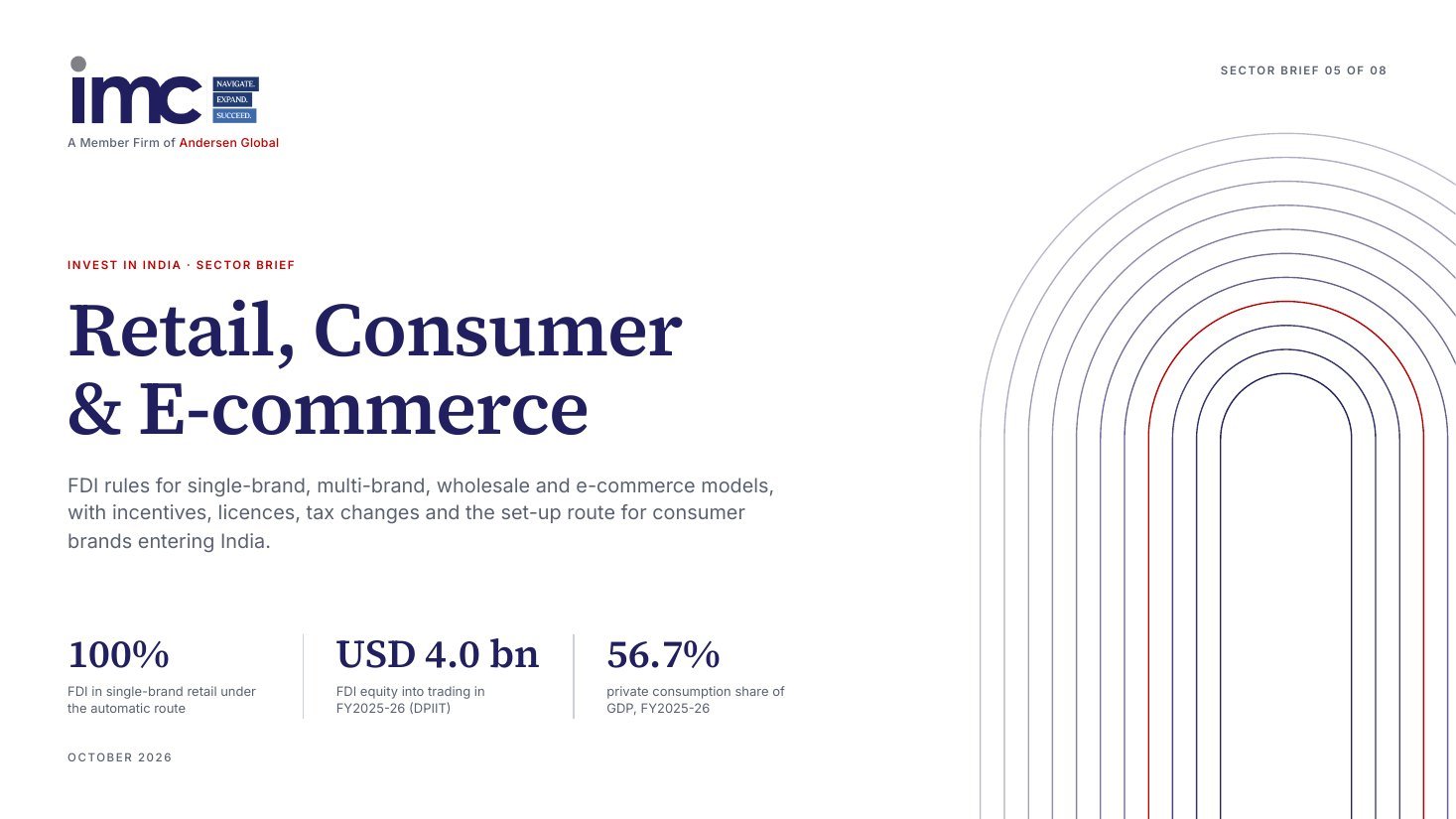
Single-brand retail, wholesale and marketplaces take 100% FDI on the automatic route; multi-brand retail is capped at 51% with approval. Inventory e-commerce is open only for exports since 3 September 2026. Sourcing proof, marketplace neutrality and consumer rules carry most of the risk.
In this brief
Everything in this sector brief
11 pages, from the market case to the set-up roadmap and every incentive with its status.
Retail, consumer and e-commerce
Single-brand retail, wholesale and marketplaces take 100% FDI on the automatic route; multi-brand retail is capped at 51% with approval. Inventory e-commerce is open only for exports since 3 September 2026. Sourcing proof, marketplace neutrality and consumer rules carry most of the risk.
ReadRecent investments in retail and e-commerce
Global retailers are putting capital into stores, logistics and fast delivery. Four announcements since December 2025 by foreign groups already operating in India, plus the Lush licensing re-entry, listed as public examples with their sources.
ReadFDI rules for retail and e-commerce
Single-brand retail, wholesale and marketplaces allow 100% FDI on the automatic route; multi-brand retail is capped at 51% with Government approval and allowed only in consenting states. Inventory e-commerce is open for exports only, since 3 September 2026.
ReadRegulators and registrations for retail
Stores need state registrations; cosmetics, food and packaged goods add more. Most approvals are routine but product-specific, so each category a brand sells can bring its own regulator. Map them before the first import.
ReadCentral incentives for consumer brands
Central support goes mainly to manufacturing and jobs, which matters for brands meeting the 30% local-sourcing rule or making in India. Budget 2026-27 adds courier-export and footwear measures. Status is shown as printed, as of 1 October 2026.
ReadState incentives for retail and consumer
States offer SGST refunds, capital subsidies and longer trading hours. Support mostly rewards manufacturing, warehousing and cold chains that supply retail. Haryana, Karnataka and Maharashtra are among the states that have agreed to FDI in multi-brand retail.
ReadTax, customs and zones for consumer brands
GST cuts lowered tax on most consumer goods and the personal-import tariff is now 10%. A foreign-owned company can pay 25.168%; a branch pays 36.40–38.22%. Rates are for tax year 2026-27, the first year under the Income-tax Act 2025.
ReadSet-up roadmap for consumer brands
From entry decision to first store in ten steps: entry model, land-border screening, brand agreement, GST, store registrations, product approvals, India sourcing, online launch, data and consumer rules, and state warehouse incentives. Entry vehicles and incorporation follow.
ReadWhat to watch in retail and e-commerce
Sourcing proof, marketplace neutrality and consumer rules carry most of the risk for foreign consumer brands. Each watch-out below is drawn from the sector brochure, with the rule behind it and where to read more.
ReadRecent changes in retail and e-commerce
What changed since 2025 for retail, consumer and e-commerce businesses in India, in date order, with the effect on investors and the original source. A second table lists other dated changes stated elsewhere in the sector brochure.
ReadSources for retail and e-commerce
The full reference list behind the retail, consumer and e-commerce pages, as cited in the sector brief dated October 2026. Secondary sources are marked; web pages were retrieved on or before 1 October 2026.
ReadUpdates
Recent changes
- medium impact
- low impact
- high impact
- high impact
Planning your move into India?
Talk to IMC about your entry structure, approvals, incentives, tax and the first year of compliance.